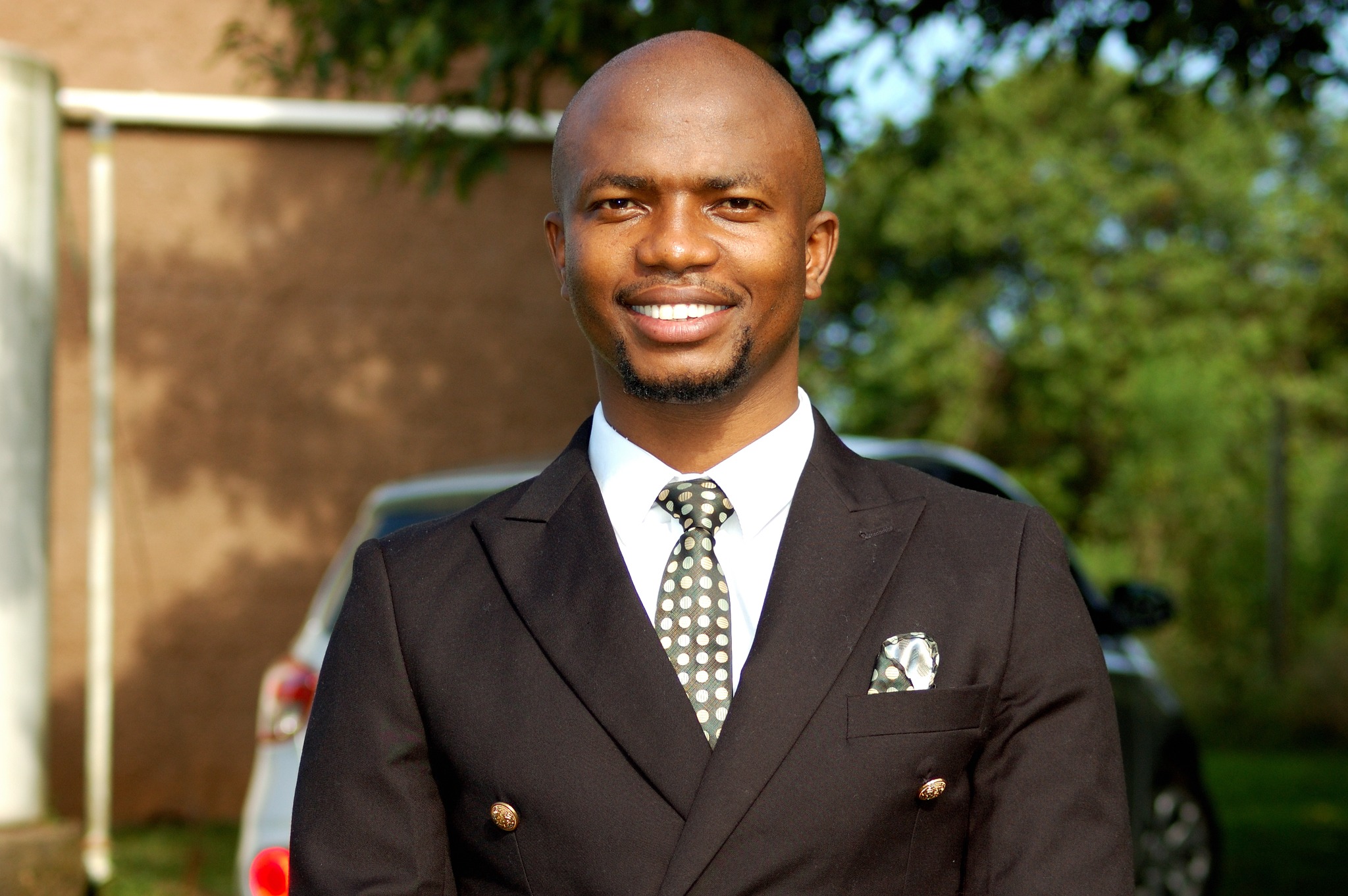
Rev. Mduduzi Mahlangu, now a minister in KwaZulu-Natal and part-time lecturer at Mukhanyo’s Durban Campus, first learnt about the college through his stepmother, whose faithful witness and influence led him to the Lord while still in high school. Some years later, after working in retail, he sensed a clear call to ministry and enrolled at Mukhanyo in 2013 with her encouragement and support.
Financial struggles made his early studies difficult, but help from his family and later from the college allowed him to continue. Reflecting on his arrival at Mukhanyo, he explains: “When I first came, I thought I already knew a lot about the Bible and church. But I was humbled when I realised how little I knew. The lecturers had so much knowledge and yet they were so humble.”
During his two and a half years at Mukhanyo, Rev. Mahlangu threw himself into student life. He joined mission teams at the KwaMhlanga Hospital and local schools, served in the choir, SRC and library, and assisted with devotions and campus events. These experiences taught him the true meaning of ministry. “We learnt that to be a minister is to serve, not to be served,” he recalls.
Although he later transferred to North-West University to complete denominational requirements, he remains deeply grateful for the foundation he received. “Had I not gone to Mukhanyo, I would not have learnt how to rightly handle the Word of God,” he says. The training, combined with lasting friendships formed during his time at the college, shaped both his character and his calling.
His interest in teaching began during his student years, when he facilitated Greek classes and supported distance groups. This has since developed into teaching Evangelism and Discipleship, and Biblical Interpretation, with plans to take on Greek and Hebrew in the coming year. “It seemed to me that the Lord was calling me in this direction,” he reflects.
Looking at the wider church in South Africa, Rev. Mahlangu believes Mukhanyo’s work is making a significant contribution by serving students from many different backgrounds. He encourages those considering studying to approach it with openness and diligence, urging them to be “students of the Bible” so that their theological training may truly strengthen the church.